Oahu · Hawaii
Freediving Courses and Training on Oahu
The practical details
Where courses run, and what the water is actually like
Updated
Mitch Brown Photo Freediving provides beginner AIDA courses, advanced freediving education, private coaching, and underwater photography sessions on Oahu. The appropriate training location and daily plan depend on the course, ocean conditions, student experience, and safety considerations.
Who this training is for
Training on Oahu ranges from complete beginners who have never held their breath underwater to certified divers preparing for advanced depth work or instructor assessment. Whether you have one free morning or a full week, there is a course, private session, or photo session structured for your experience level and the time available.
New to freediving?
Start with the two-day AIDA 1+2 course. It is the recommended beginner option for students who want theory, confined-water skills, supervised open-water training, and the opportunity to earn AIDA 2 certification after completing every requirement.
View the AIDA 1+2 courseStudents who would rather stay in confined water only can start with the one-day AIDA 1 course, which has no ocean depth diving at all.
Advanced course options
Certified divers can continue with AIDA 3, a three-day advanced course that develops equalization, relaxation, safety and depth technique, with training up to a maximum of 30m. Divers who complete AIDA 3 can continue to AIDA 4, a four-day master course with advanced safety, rescue and depth training up to a maximum of 38m. Freedivers who hold AIDA 4 and want to teach can apply for the AIDA Instructor Course, a minimum seven-day program that prepares candidates for instructor assessment.
To see setting, experience needed, duration, class size and price side by side, compare all freediving courses.
Private coaching
Private sessions are available for complete beginners who want a relaxed introduction, students who need extra practice, and visiting divers training in Hawaii on a tight schedule. Sessions are held near Duke Kahanamoku Lagoon in Waikiki, with start times arranged individually rather than fixed. To work one-on-one at your own pace, book private freediving training.
Underwater photography
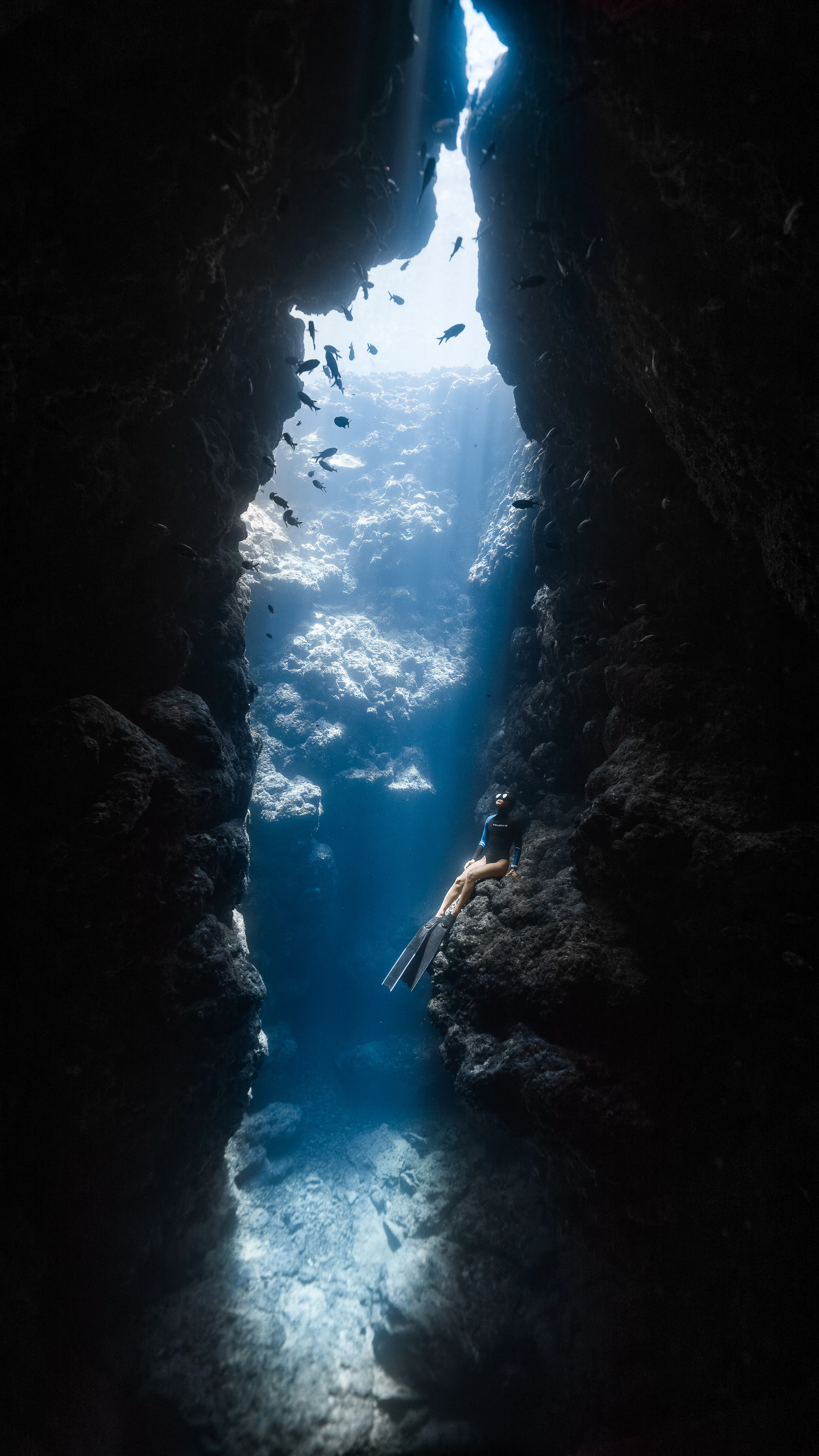
The Creative Photo Session is a two-hour private underwater portrait session in the open ocean off Oahu, with ten finished photos delivered. Participants must hold an AIDA 2 certification or equivalent freediving qualification, and a full wetsuit is required. To bring home a curated set of underwater portraits, plan an underwater photography session.
Where freediving courses meet on Oahu
All scheduled courses start near Duke Kahanamoku Lagoon, at the Waikiki end of Ala Moana, in Honolulu. It is a sheltered, calm-water lagoon, which makes it a good place for the confined-water parts of a course and a straightforward place for everyone to find. The exact meeting spot is in your confirmation email. Courses begin at 7:30 AM. AIDA 1, AIDA 1+2, AIDA 3 and AIDA 4 all run until roughly 2:00 PM each day. Private training sessions and the Instructor Course are scheduled with you individually rather than at a fixed time.
How the training location is selected
There is no single fixed dive site. On open-water days the location is chosen that morning based on wind, waves, current, visibility, harbor operations, official warnings, site availability, the requirements of the course being run, and participant safety. Most training happens off the south shore, either from a boat or as a shore entry, depending on conditions and what the group needs.
What Oahu ocean conditions are like
Conditions on this island change by shore and by season. The south shore is usually calmest in winter, while summer south swells can make it lumpy. Choosing the site on the day, rather than committing to one location in advance, is what keeps training comfortable rather than a fight against the water.
Water temperature and wetsuit guidance
Hawaii water is warm compared with most freediving destinations, but a wetsuit still matters on a course day. What you need depends on you, on the conditions on the day, and on how long the session runs, because repeated descents and long surface intervals cool you far more than a short swim does. Rather than publishing a single figure that would be wrong for half the year, plan for the session you are booking and read the wetsuit guidance for Oahu freediving before you rent or buy.
Which freediving course should you choose?
If you are new to the sport, the recommended two-day AIDA 1+2 beginner course is the place to start. It covers theory, confined-water skills, and supervised open-water training, and it is the level at which AIDA 2 certification can be earned. The AIDA 2 certification depth requirement is 12m. Course training may continue to a maximum of 20m when it is appropriate, but reaching 20m is not required to certify, and certification is awarded only after every applicable requirement has been completed. If you want to see the levels side by side, compare every freediving course.
Parking and arrival
Transportation is not included in any course or session; you make your own way to the meeting point. There is public parking near Duke Kahanamoku Lagoon and along Ala Moana, but it fills quickly on weekends and holidays, so give yourself extra time. If you are staying in Waikiki, walking or a short rideshare is often simpler than driving. If a course day runs from a different site, you will be told where to park when the location is confirmed.
What happens when conditions are unsafe?
If conditions are unsafe, training is rescheduled at no cost. Moving a day is preferable to running a course in water that makes people tense, since tension works against a good freediving day. If you are visiting for a short trip, share your travel dates when you book so a buffer can be built in; a rescheduled ocean day can sometimes be swapped for pool work if your window is tight.
Rain alone does not determine whether an activity proceeds. The decision is based on the conditions that affect safe instruction, not on whether it is raining. Wildlife sightings, weather, visibility, and the use of any particular dive site are never guaranteed.
What to arrange before your session
Fins, mask, snorkel, and a weight belt are provided for AIDA courses. A wetsuit is highly recommended and is not always provided. If you need a wetsuit, contact a local dive shop before your course to confirm rental availability, sizing, and opening hours. Arrange the rental before the morning of your course. Also bring reef-safe sunscreen, water, a towel or yoga mat, a change of clothes, a notepad, and slippers or sandals.
If Frenzel equalization is new to you, it helps to learn how Frenzel equalization works before your course starts.
New to the sport
If you have never tried freediving, it helps to learn what happens in a beginner course and read the beginner safety guide before you book, so you know what a day of training looks like and how risk is managed.
Course and session pages
- AIDA 1: one day, confined water only
- AIDA 1+2: two days, the recommended beginner option
- AIDA 3: three days, advanced
- AIDA 4: four days, master level
- Instructor Course: minimum seven days
- Private Training: one-on-one coaching
- Creative Photo Session: underwater photography
Safety
Nobody breath-holds alone in any session. Every dive has a trained buddy and a plan, classes are small, and depth limits are ceilings rather than targets. If you want the detail on how Mitch teaches, see the About page. The FAQ covers prerequisites, health questions and what to bring. If you are still unsure which course fits your trip, email Mitch.
Plan your freediving course on Oahu
Book the course that matches the level you want, then treat the confirmation email as your source of truth for the day: exact meeting instructions are provided with the booking confirmation, and they take precedence over the general guidance on this page. Bring what the course page lists, arrange any wetsuit rental in advance, and expect the training plan to be adapted to the conditions on the morning rather than fixed in advance.