
Freediving guide
Is Freediving Safe for Beginners?
Published · Updated
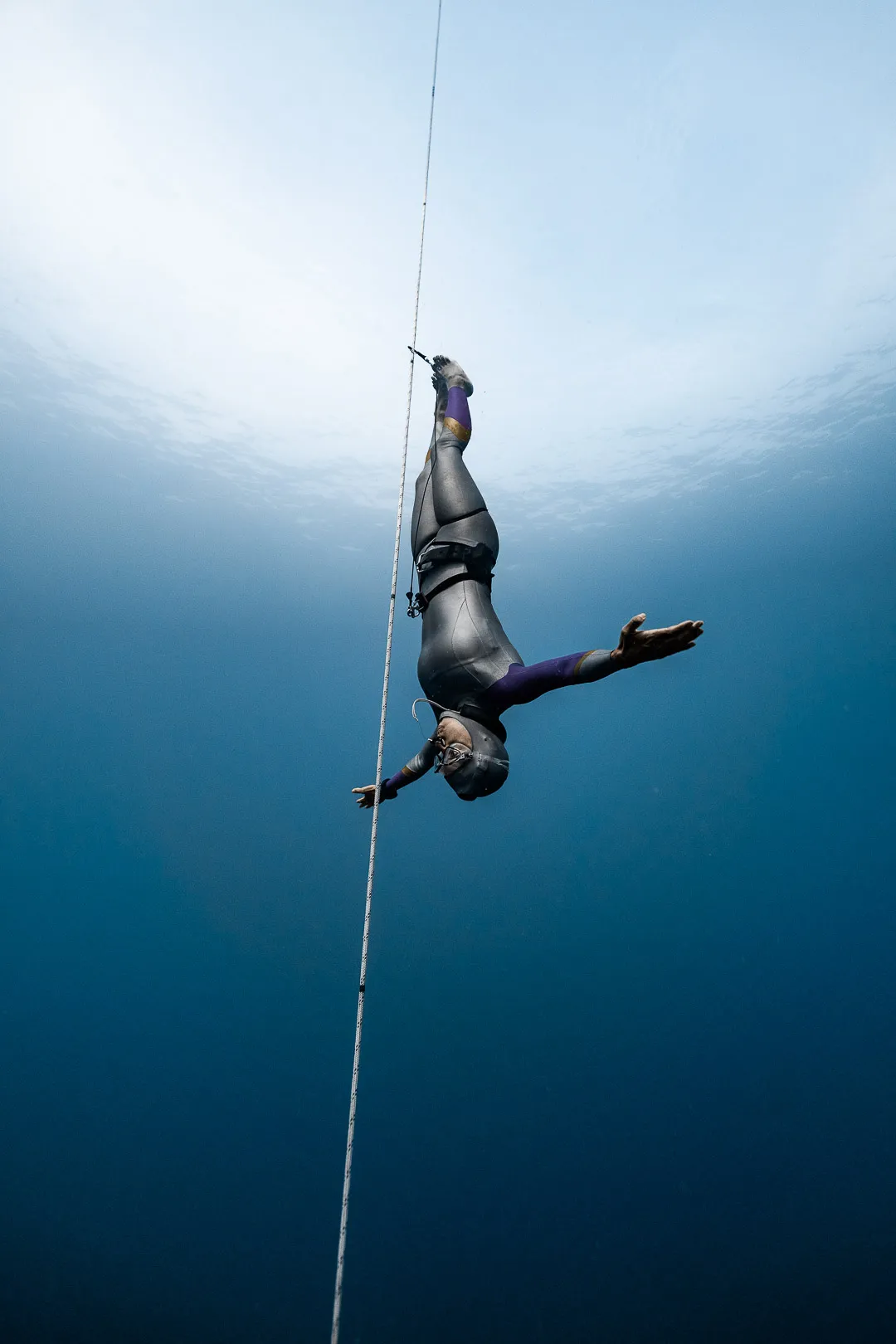
Freediving can be approached responsibly by beginners when it is taught and practiced with appropriate supervision, conservative progression, suitable conditions, and established safety procedures. It is not safe to practice breath-hold diving alone.
Never freedive alone
Never freedive alone. A buddy or instructor must be trained, attentive, close enough to assist, and following an appropriate safety procedure. Being near other swimmers is not the same as having a qualified safety buddy.
Why beginners should take a course
A professionally taught beginner course introduces freediving gradually while making safety, rather than depth or breath-hold performance, the priority. It gives you supervised practice with buddy procedures, recovery breathing, and rescue skills before you are ever asked to do anything at your limit.
Why you should never freedive alone
The most important freediving rule is never to train alone. Loss of motor control or blackout can happen with little warning, and a diver alone at the surface or underwater has no one available to help.
What a trained safety buddy does
A trained buddy actively supervises a freediver during breath-hold practice rather than simply being present nearby. That includes watching the diver at the surface and during the dive, timing appropriately, recognizing signs of difficulty, and being ready to assist or perform a rescue immediately if needed.
Blackout and loss of motor control
Blackout is a loss of consciousness that can occur when the body's oxygen level drops too low, and a related but milder event is loss of motor control, sometimes called a "samba," where a diver briefly loses smooth muscle control. Both are reasons why active buddy supervision and conservative, well-rested diving matter more than reaching a particular depth or time.
Why hyperventilation is dangerous
Breathing rapidly or forcefully before a dive can lower carbon dioxide without meaningfully increasing oxygen. Because the urge to breathe is driven mainly by rising carbon dioxide, this can delay the warning signal to surface and increase the risk of blackout. Beginner courses teach recognized breathing and relaxation methods instead of hyperventilation.
Medical conditions and clearance
Participants must review the required health information and complete the applicable course forms. Some medical conditions, recent illnesses, injuries, or medications may make freediving unsuitable or require clearance from a qualified medical professional. This article does not provide medical advice; contact the instructor before booking if you have concerns, and consult a qualified medical professional for individual guidance.
Weather, current, visibility, and boat traffic
Ocean conditions affect how a training day is planned and run. Wind, current, visibility, and boat traffic can all change what is appropriate on a given day, and a responsible instructor will adjust the plan, location, or depth accordingly rather than following a fixed schedule regardless of conditions.
How Mitch approaches beginner safety
Mitch is an AIDA Instructor Trainer who has taught freediving on Oahu since January 2022. Courses are taught in small classes, and students are never asked to force a breath hold, push through equalization pain, or dive alone. Training progresses according to comfort and demonstrated ability rather than a fixed target.
Questions to ask before booking a course
Many common questions about courses, equipment, certification, and what to expect can be answered using the course assistant on this website. If you cannot find the answer you need, contact Mitch directly at [email protected].
Education reduces risk but cannot eliminate it
No ocean activity is completely risk-free, and freediving involves real risks, including loss of motor control, blackout, pressure injuries, and drowning. Training helps you understand the hazards, recognize unsafe practices, and build responsible habits, but it cannot remove risk entirely.
Learn in a structured beginner course
The two-day AIDA 1+2 course introduces beginner technique, safety, rescue skills, confined-water practice, and supervised open-water training.
View the recommended beginner courseYou can also review the course prerequisites and safety questions or read about what happens during a beginner freediving course.
Compare freediving course options · Read the Oahu freediving course FAQ · How Mitch teaches and approaches safety