Freediving guide
What Happens in a Beginner Freediving Course?
Published · Updated
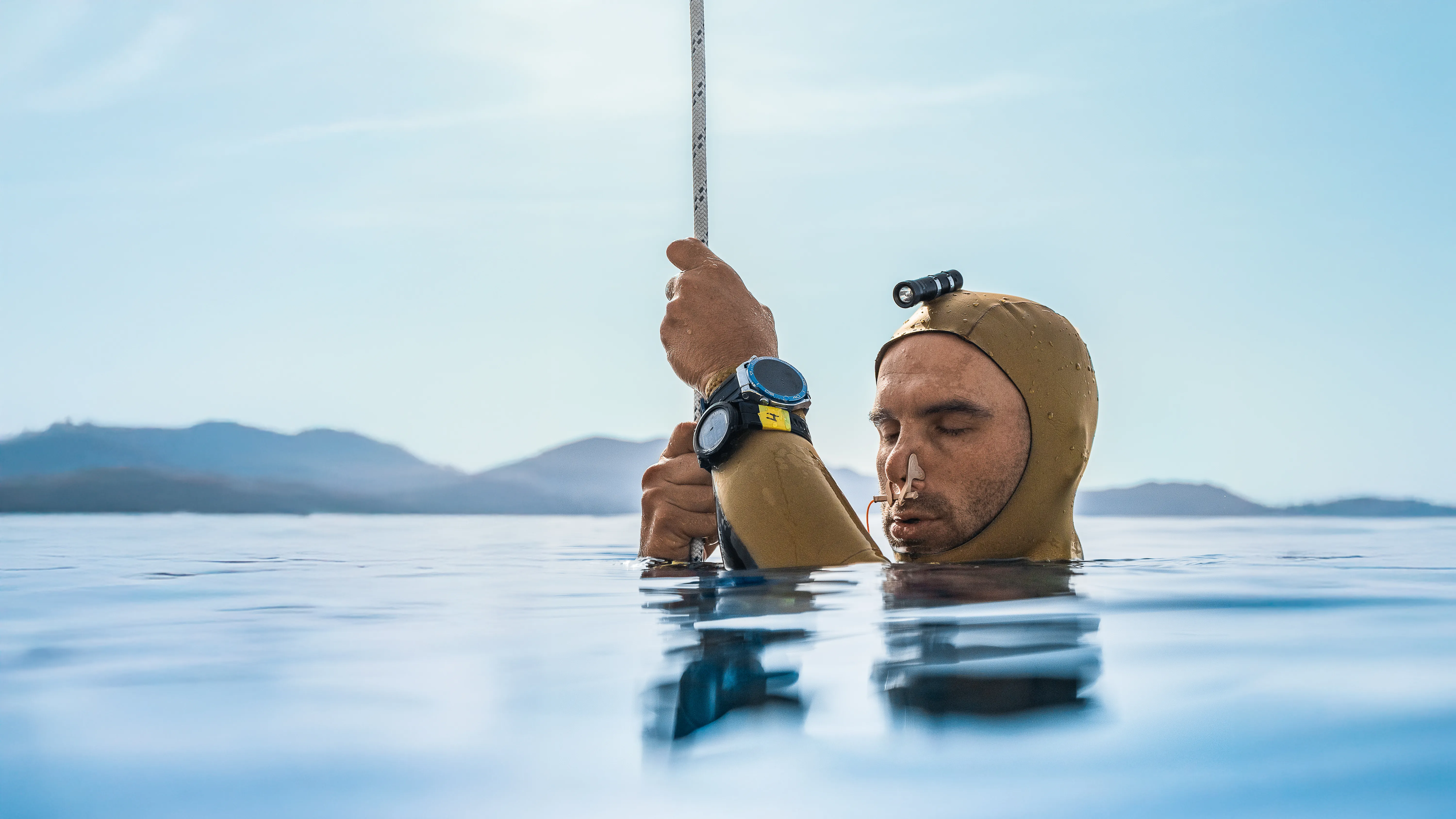
A beginner freediving course combines classroom-style theory, breathing and relaxation concepts, confined-water skills, safety and rescue practice, and, for AIDA 2, supervised open-water training. The two-day AIDA 1+2 course is the recommended beginner option for students who want the complete progression.
Before the course
No previous freediving experience or breath-hold training is required for the beginner courses taught on Oahu. Participants review the required health information and complete the applicable course forms before the first session.
Theory and breathing concepts
The course begins with the principles behind safe freediving: how the body responds to a breath hold, how to prepare for a dive, how recovery breathing works, and why freedivers never train alone. Equalization, the technique used to balance pressure in the ears and sinuses, is also introduced, along with what to do if it feels difficult or uncomfortable. You can read more about how to equalize using Frenzel.
Confined-water skills
Confined water means a controlled pool or calm, shallow-water environment. This is where you begin practicing relaxation, breathing, buddy supervision, and basic freediving technique, including static apnea (holding your breath while resting at the surface) and dynamic apnea (swimming underwater on one breath). These exercises are supervised and developed progressively; you will not be asked to force a breath hold.
Safety and rescue practice
Every beginner course includes buddy procedures, surface protocols, recognizing signs of difficulty, and rescue response skills. These are practiced in confined water before being applied in open water. Read more about beginner freediving safety.
Open-water training
The recommended two-day AIDA 1+2 course also includes open-water training. You practice diving on a line, equalization, efficient movement, recovery breathing, buddy procedures, and rescue skills. Depth is introduced gradually according to comfort, technique, safety, and ocean conditions.
The AIDA 2 certification depth requirement is 12m. Review the full AIDA 2 depth and skill requirements to see how depth, technique, safety, rescue, and the other certification requirements are assessed. The maximum course training depth is 20m, but reaching 20m is not required.
Equipment and wetsuits
Fins, mask, snorkel, and a weight belt are provided on course. A wetsuit is not supplied but is highly recommended; check the individual course page for what is included, and arrange a rental in advance if you need one.
What happens if you do not complete every requirement?
If you do not complete every requirement during the scheduled course, you will receive clear feedback about what remains and what to practice next. Outstanding requirements may be completed within one year of the course, giving you time to continue training and return to demonstrate the remaining requirements.
What the course does not guarantee
Booking or attending a course does not guarantee certification, a particular depth, or completion on a particular schedule. Certification is awarded only after every applicable requirement is successfully completed. Training depth and activity plans can also change because of equalization, comfort, safety, weather, ocean conditions, or instructor judgment.
Choosing between AIDA 1 and AIDA 2
For most beginners who want both confined-water and open-water training, the two-day AIDA 1+2 course is recommended. If you would rather begin with a single day of confined-water training in a pool-like environment, the one-day AIDA 1 course is the gentler option. You can compare AIDA 1 and AIDA 2 in more detail before deciding.
How to book
You can book the recommended two-day AIDA 1+2 course directly, or compare all available courses and read the frequently asked questions first.
Compare freediving course options · Read the Oahu freediving course FAQ · How Mitch teaches and approaches safety